Showing posts with label lake. Show all posts

Thursday, April 11, 2013

Ubari or Awbari Oasis lake Sand Sea of Fezzan, Libya


Recent archaeological research revealed the existence of several fresh-water lakes, known as palaeolakes, in ancient Fezzan, Libya. Some of these lakes were located in the southern regions of Wadi Irawan, Wadi al-Ajal and the Ubari Sand Sea. The archaeological finds from the area include dark layers of organic matters, shells, hand axes and other Palaeolithic and Neolithic implements and tools which strongly suggested ancient human activity in Fezzan. These lakes were part of a larger network of lakes which have included the legendary nearby Lake Tritonis and Lake Chad among numerous other smaller lakes.


Precise dating of the lakes is yet to be confirmed, but current studies, conducted by the Fezzan Project, suggest Pleistocene and Holocene human presence. However, results from Wadi al-Ajal's playas (: which are mud flats with rough surface, cracks and salt encrustation, like the Playa of Germa which represent the lakes just before drying out) indicate these lakes to have disappeared around 3000 years ago.




Wednesday, March 13, 2013

Awesome Frozen Air Bubbles in Abraham Lake


 Abraham Lake is an artificial lake on North Saskatchewan River in western Alberta, Canada. The lake was created in 1972, with the construction of the Bighorn Dam, and named after Silas Abraham, an inhabitant of the Saskatchewan River valley in the nineteenth century.


Abraham Lake is home to a rare phenomenon where bubbles get frozen right underneath its surface. They're often referred to as ice bubbles or frozen bubbles. This has made the lake famous among photographers.


Photographer Fikret Onal explains the phenomenon: "The plants on the lake bed release methane gas and methane gets frozen once coming close enough to much colder lake surface and they keep stacking up below once the weather gets colder and colder during [the] winter season."


Monday, March 4, 2013

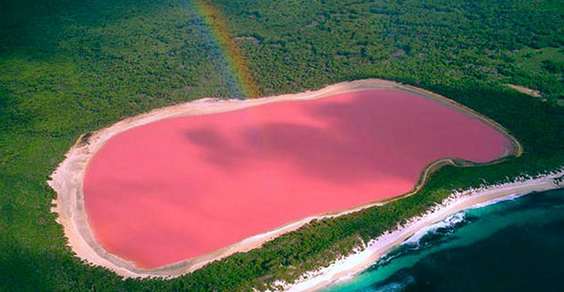
The Naturally Pink Lake Hillier Lake In Australia


No joke, Lake Hillier located on the largest Archipelago island in Australia is pepto-bismal pink. The lake is only a few steps away from the normal blue colored Southern Ocean. Scientists can’t actually figure out why the lake is so stubbornly pink. Despite their efforts, it refuses to turn blue, green, or even brown as a lake should be. Scientists estimate that the color is due to the mixture of sodium bicarbonate, or baking soda, and sea salt found in the lake.


Sunday, February 3, 2013

Croatia - Plitvice Lakes